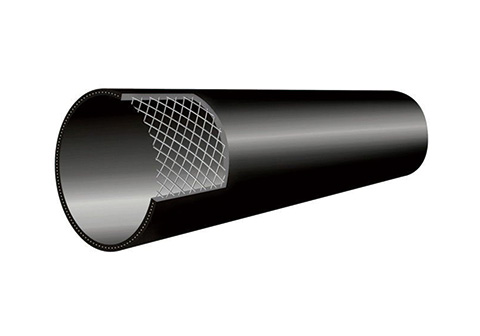
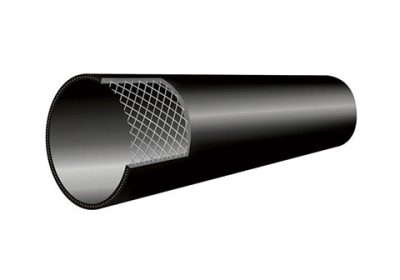
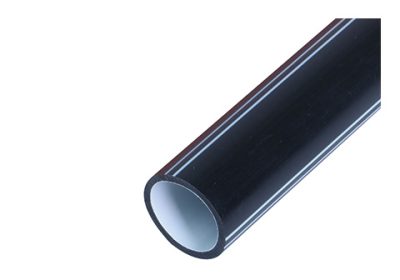
Internal Steel Mesh Reinforcement → Enhanced Pressure Rating → High-Lift Capability The internal steel wire frame provides a rigid structural skeleton that allows the HDPE composite pipe to maintain a working pressure of up to 3.5MPa. This reinforcement prevents the rapid crack propagation often associated with pure plastic pipes, enabling the safe transport of fluids in high-lift mining operations and high-pressure municipal mains without the weight of traditional steel.
Dual-Sided HDPE Encapsulation → Comprehensive Corrosion Resistance → Extended Service Life Both the inner and outer layers are composed of high-density polyethylene, which remains chemically inert when exposed to acids, alkalis, salts, and organic solvents. This material property prevents electrochemical corrosion and eliminates the need for external anti-corrosion coatings or cathodic protection, ensuring the pipeline remains functional for decades in aggressive soil or chemical environments.
High Ring Stiffness (SN8–SN16) → Superior Load Distribution → Reduced Civil Engineering Costs The composite structure achieves a high ring stiffness, reaching SN16 in specific configurations, which resists external soil pressure and traffic loads. This structural rigidity allows for installation in soft-soil conditions or under highways with minimal deformation, significantly reducing the requirement for expensive concrete bedding or specialized trench backfilling.
Electrofusion Jointing Technology → Molecular Bond Continuity → Leak-Proof Integrity The pipe system utilizes electrofusion welding to create joints where the HDPE material of the pipe and fitting are fused at the molecular level. This results in a connection that is as strong as the pipe itself, eliminating potential leak points at the joints and reducing the risk of environmental contamination or infrastructure damage caused by seepage.
Smooth Interior Surface → Reduced Friction and Head Loss → Lower Operational Energy Costs The HDPE inner wall features a low friction coefficient, which reduces head loss by approximately 30% compared to carbon steel pipes of the same diameter. This hydraulic efficiency prevents scaling and sedimentation buildup, allowing for smaller pump sizes and lower energy consumption to maintain required flow rates over the project’s lifecycle.
Low Thermal Conductivity → Thermal Stability and Insulation → Reduced Maintenance Complexity The composite material exhibits a low heat conduction coefficient, which naturally resists temperature fluctuations and prevents the formation of dew in humid summer conditions. This thermal property often removes the requirement for external thermal insulation in temperate climates, simplifying the installation process and reducing material costs for the contractor.
UV and Aging Resistance → Material Stability → Reliable Outdoor Performance The polyethylene matrix is formulated with aging-resistant additives that protect the pipe from ultraviolet radiation and oxidation. This ensures that the pipe maintains its mechanical properties and impact resistance even when stored outdoors or utilized in above-ground industrial applications, such as oil and gas field gathering lines.
Scope of application
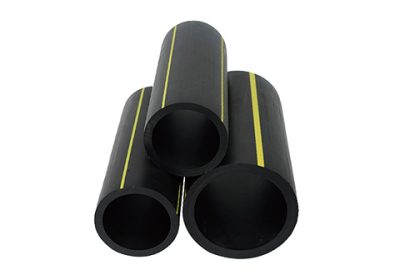
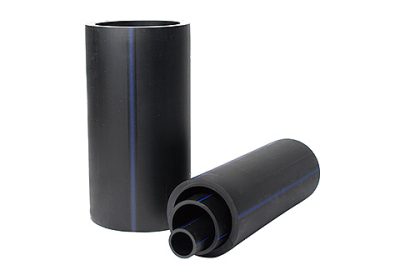
The unique composite structure of the Steel Wire Frame Reinforced HDPE Pipe allows it to bridge the gap between traditional thermoplastic pipes and metal piping systems. Its engineering application is primarily focused on environments where high internal pressure, significant external loads, or aggressive chemical corrosion make conventional materials unsuitable.
Municipal Water Supply and Fire Protection InfrastructureIn municipal engineering, this steel reinforced HDPE pipe is utilized for high-pressure potable water mains and dedicated fire protection networks. It is designed to handle common water supply pressures (SDR11 to SDR26) and provides a reliable solution for long-distance water transmission. The high ring stiffness (up to SN16) makes it particularly suitable for underground installation in areas with heavy traffic loads or unstable soil conditions, where it maintains structural integrity without the need for extensive concrete reinforcement.
Mining Tailings and Mineral Slurry TransportationWithin the non-ferrous metal and mining sectors, the pipe is employed for the transportation of tailings, ore slurries, and backfill materials. These systems often operate under high-lift and high-pressure conditions, transporting abrasive and corrosive mixtures. The internal steel wire skeleton provides the necessary tensile strength to withstand pressure surges, while the HDPE inner liner offers superior wear resistance compared to galvanized or carbon steel pipes, significantly reducing maintenance cycles in mining operations.
Industrial Chemical Processing and Waste DisposalFor the chemical industry, this HDPE composite pipe serves as a primary conduit for the transport of process chemicals, including various acids, alkalis, and salts. It is frequently applied in wastewater treatment plants and chemical production lines where the medium is highly corrosive but requires a pressurized delivery system. The double-faced corrosion resistance ensures that neither the internal chemical medium nor the external corrosive soil affects the steel reinforcement, preventing structural failure over a long service life.
Oil and Gas Field Gathering and Injection LinesIn the energy sector, specifically within oil and gas fields, the pipe is used for gathering lines, produced water transportation, and brine injection systems. The medium typically involves a mixture of crude oil, gas, and highly saline water at temperatures up to 60°C. Its resistance to ultraviolet radiation and oxidation makes it a stable choice for both buried and above-ground gathering systems where traditional metal pipes would succumb to rapid electrochemical corrosion.
Marine Engineering and Seawater DesalinationThis pipe is extensively used in seawater transport, including intake and outfall lines for desalination plants and cooling water systems for coastal thermal power engineering. Given the high chloride content of seawater, conventional steel pipes require expensive coatings and cathodic protection. This steel wire frame reinforced pipe remains unaffected by salt-water corrosion and prevents marine growth (scaling) on the smooth inner walls, maintaining consistent flow rates and hydraulic efficiency.
Infrastructure Crossings and Highway DrainageIn civil engineering projects such as highway and railway construction, these pipes are used for pressurized drainage and utility crossings. The high ring stiffness (SN8, SN12.5, and SN16) allows the pipe to be installed under roadbeds where it must withstand continuous vibration and heavy external loads. Its lightweight properties and electrofusion jointing capability enable rapid installation during limited construction windows, reducing the overall project timeline and labor costs for contractors.
Thermal Power Plant Ash and Slurry SystemsIn thermal power engineering, the pipe is used for hydraulic ash removal systems and the transportation of desulfurization slurries. The medium often consists of fly ash and water mixtures which can be both abrasive and chemically active. The composite pipe’s ability to resist internal abrasion while maintaining high-pressure integrity ensures a reliable transport system that resists the scaling and head loss typically associated with galvanized pipe substitutes.
Parameters
ring stiffness
SN16
SN12.5
SN10
SN8
SN6
Pressure rating
SDR11
SDR13.6
SDR17
SDR21
SDR26
outer diameter(mm)
thickness
thickness
thickness
thickness
thickness
20
2.3
25
2.3
32
3
40
3.7
50
4.6
63
5.8
4.7
75
6.8
5.6
4.5
90
8.2
6.7
5.4
4.3
110
10
8.1
6.6
5.3
4.2
125
11.4
9.2
7.4
6
4.8
140
12.7
10.3
8.3
6.7
5.4
160
14.6
11.8
9.5
7.7
6.2
180
16.4
13.3
10.7
8.6
6.9
200
18.2
14.7
11.9
9.6
7.7
225
20.5
16.6
13.4
10.8
8.6
250
22.7
18.4
14.8
11.9
9.6
280
25.4
20.6
16.6
13.4
10.7
315
28.6
23.2
18.7
15
12.1
355
32.2
26.1
21.1
16.9
13.6
400
36.3
29.4
23.7
19.1
15.3
450
40
33.1
26.7
21.5
17.2
500
45.4
36.8
29.7
23.9
19.1
560
50.8
41.2
33.2
26.7
21.4
630
57.2
46.3
37.4
30
24.4
710
52.2
42.1
33
27.2
800
58.8
47.4
38
30.6
900
53.3
42.9
34.4
1000
59.3
47.7
38.2
1200
57.2
45.9
FAQ
How can we verify the pressure rating reliability of your Steel Wire Frame Reinforced HDPE Pipe for high-lift or high-pressure projects?
Every production batch undergoes rigorous hydrostatic pressure testing at 1.5 times the rated working pressure. Unlike conventional thermoplastic pipes, the internal steel wire mesh skeleton provides constant physical constraint, effectively preventing "creep" or structural deformation under sustained high pressure. We provide full Material Test Reports (MTR) and PE100 raw material certifications to ensure absolute safety for high-stress engineering environments.
How does the pipe perform in high-UV and high-temperature environments common in Southeast Asia and Africa?
The high-density polyethylene matrix is formulated with a precise ratio of carbon black and UV stabilizers, preventing material embrittlement from intense solar radiation. Additionally, the composite structure maintains a low thermal conductivity, ensuring fluid temperature stability and preventing external condensation in humid tropical climates. This guarantees a stable 50-year service life, significantly lowering the Total Cost of Ownership (TCO) compared to traditional galvanized pipes.
Why Choose EXLON PIPE?
Backed by 25 years and 116 production lines, EXLON PIPE ensures disciplined quality and stable supply reliability.
We support engineering contractors and project procurement teams with HDPE & PVC pipe solutions across Africa, the Middle East and Latin America. Let us know your project requirements and we will respond promptly.
We support engineering contractors and project procurement teams with HDPE & PVC pipe solutions across Africa, the Middle East and Latin America. Let us know your project requirements and we will respond promptly.